
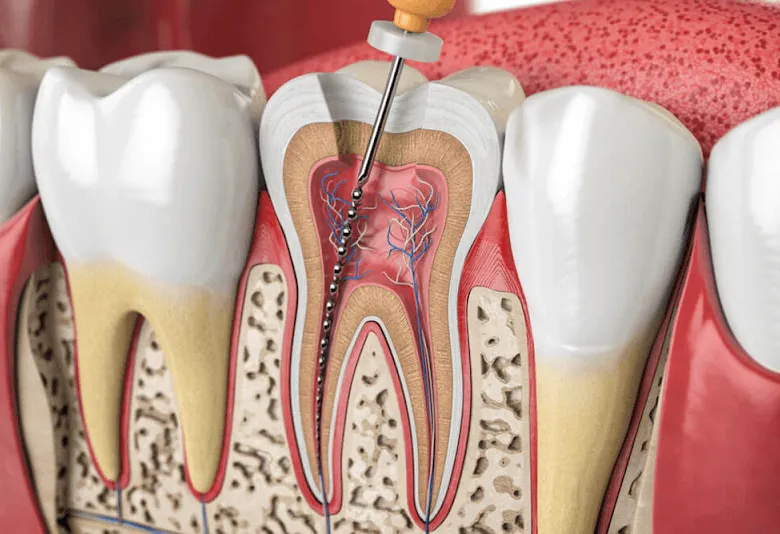
What Is a Root Canal?
A root canal is a dental procedure used to save a tooth when the pulp, or soft tissue inside the tooth, becomes infected or inflamed due to deep decay, cracks, trauma, or repeated dental procedures. Root canal treatment removes the infection, relieves discomfort, and helps preserve your natural tooth whenever possible.
Relieve Tooth Pain and Save Your Tooth
BOOK YOUR ROOT CANAL CONSULTATION
Benefits of Root Canal Treatment
Root canal therapy can:
- Eliminate infection and relieve tooth pain.
- Save your natural tooth and help avoid extraction.
- Restore normal biting and chewing function.
- Prevent infection from spreading to surrounding tissues.
- Preserve your natural smile and support jawbone health.
- Provide long-lasting results with proper restoration and care.
What Does Root Canal Treatment Involve?
Comprehensive Examination
Treatment begins with a comprehensive dental examination and digital X-rays to assess the affected tooth.
Root Canal Procedure
After thoroughly numbing the area, we create a small opening to access the infected pulp. The damaged tissue is removed, and the root canals are carefully cleaned, disinfected, shaped, and sealed with a bio-compatible material.
Final Restoration
A temporary filling may be placed until the tooth receives its permanent restoration. Because a root canal-treated tooth may be more vulnerable to fracture, a dental crown is often recommended to provide added strength and protection. With modern techniques and anesthesia, most patients find root canal treatment comfortable.
Tips for After Root Canal Treatment
To support healing and protect your treated tooth:
- Avoid chewing on the treated tooth until numbness has completely worn off and the permanent restoration is placed.
- Mild tenderness for a few days is normal and can often be managed with over-the-counter pain medication as directed.
- Continue brushing and flossing regularly to maintain good oral hygiene.
- If a crown is recommended, schedule your final restoration promptly to help protect the tooth from fracture.
- Contact our office if you experience severe or worsening pain, significant swelling, or if your temporary filling becomes loose or falls out.
Book Appointment